by Alex Carrigan
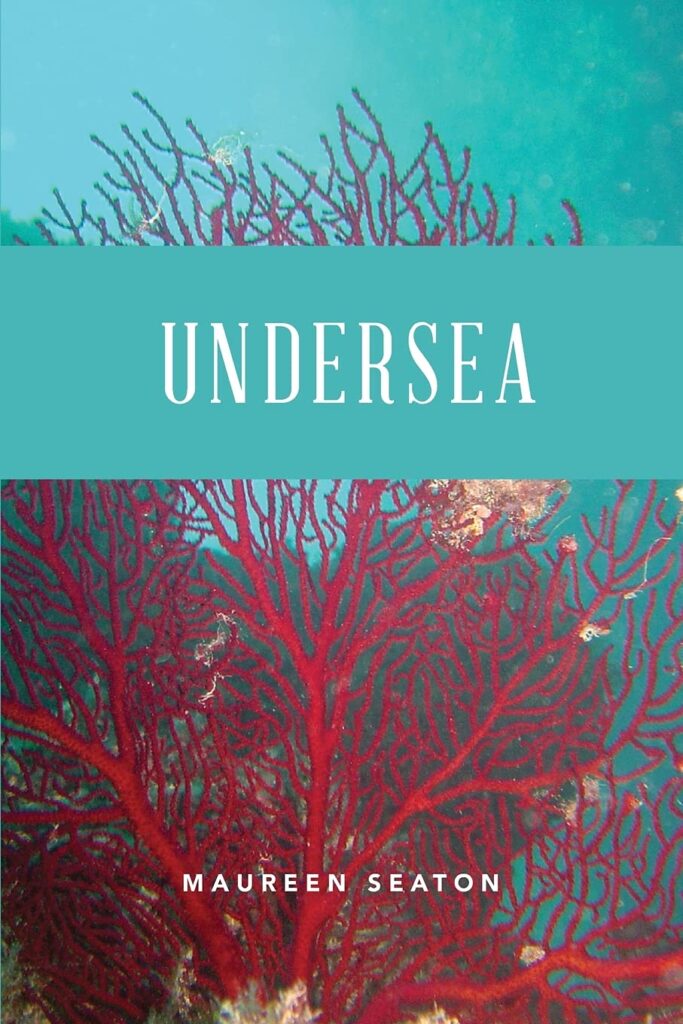
Poet Maureen Seaton passed away on August 26, 2023, at the age of 75 following a six-year battle with cancer. In her career, she had published over two dozen collections of poetry, including Undersea, originally published in 2021 by JackLeg Press. The collection will be rereleased on February 9, 2026, with the poems published as Seaton originally intended. With the second edition of the collection coming out, it’s fascinating to read Undersea again and understand how the read of the work has evolved five years after it was first published and two years after the poet’s passing.
Undersea is divided into multiple sections, with the majority of pieces written about the Florida gulf region. From the start, Seaton establishes her style and voice quite memorably, with the opening poem “Rules for Cave Diving” setting the tone perfectly with verses like “Proceed until you find the end of the cave / or run out of air, whichever comes first…” and “Remember you dropped stones to gauge depth? / They formed an altar at the mouth of the cave. / But that was long ago. Before you had lungs.” She also establishes the format of the poems; many of the pieces are written in short, prose poems, or in couplets, with the occasional micropoem mixed in.
The poems in Undersea primarily look at the observation of aquatic life and how people encroach upon their habitats. The poem “Sauteed Barnacles” examines the nature of barnacles only after Seaton describes how best to eat them, while “A Pod of Whales” contrasts beached whales with caring for someone with night terrors. Others examine the sort of people who live in the region, from the ponytailed men who resemble Jesus to the New Yorkers who winter in Florida.
It’s in the second section of the collection that Seaton unveils one of her more ambitious poems in “Salt.” Inspired by artist Lea Anderson’s assignment for her students where they’re asked to create 50 drawings in four hours, “Salt” is that same challenge in poetry. This section, which naturally takes up the majority of the collection, is a wide array of poetic fragments, quotes from poets like Kimiko Hahn and Joseph Oets, and confessional monostitches. These pieces ruminate on Seaton’s siblings and Lot’s wife, pay attention to the scenery of where Seaton is writing these poems, and other thoughts that come to mind when the mind is left to wander. “It would be fun to reach for some watercolors right now,” Seaton writes in one poem. “I’m reaching for watercolors. Drawing down the blue.”
So what does it mean to reprint this collection not even a decade after first released and only a few years since the passing of the author? For this reviewer, it’s to serve as an evolution of how one views the images and thoughts a poet commits. When Undersea was first published, the collection would have read as casual observation about a region and the people and creatures that inhabited it, combined with the poet’s perspective on them. Now, years later, these pieces take on a new, somewhat bittersweet read. Many of these poems would have been some of the last images Seaton associated with the gulf and a demonstration of her thought process. They ask the reader to think about how a memory of an image can evolve over time, and what declarations we make can shift or represent something greater. One of the last pieces in the collection, “The Mystery of the Direction of Time,” is composed of numerous statements about a “She,” that is hard to not read as about Seaton herself. Some of the lines include the following:
She will be a sudden slanted lighthouse.
She will snorkel in the gulf, a wizened mermaid.
She will tend small fires, hiding them in pits along the beach.
She will sing in a way both pthalo blue and new-moonish.
She will stretch in a great heron pose, a long drink of seawater.
The rerelease of Undersea is both a tribute and a summarization of Maureen Seaton, and a reminder of what made her such a cherished poet. Rereading these poems elicits many thoughts and emotions towards the ordinary and the grandeur of the world around is, viewed primarily through a window near a line of palm trees. In the sway and bend of the trees, the poems of Undersea reveal what can be found in the world that we can observe and how we can become part of the ecosystem if we take the time to focus.
Alex Carrigan (he/him) is a Pushcart-nominated editor, poet, and critic from Alexandria, VA. He is the author of Now Let’s Get Brunch (Querencia Press, 2023) and May All Our Pain Be Champagne (Alien Buddha Press, 2022). He has appeared in HAD, fifth wheel press, Sage Cigarettes, JAKE, Inlandia Journal, and more. Visit carriganak.wordpress.com for more info.
Add your first comment to this post