
by Zosia Paul
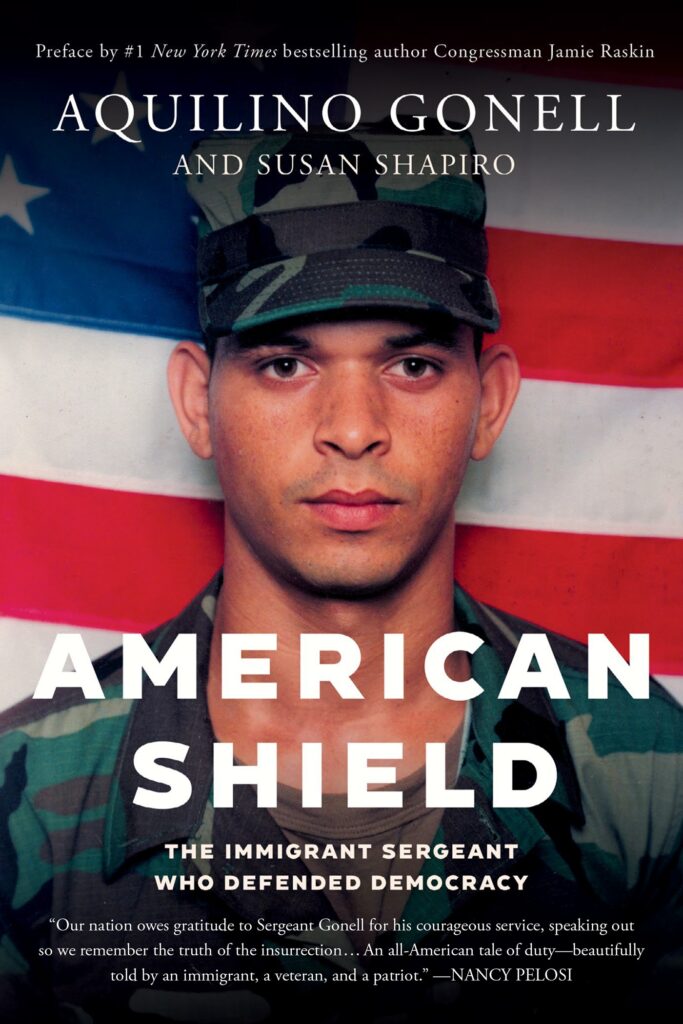
“I’d once naively believed that a true patriot obeyed the chain of command and rules to the letter. But now I realized that exposing government injustice was more essential,” writes Aquilino Gonell, one of the brave officers who protected the United States Capitol building from insurrectionists on January 6, 2021. In this memoir, co-authored with award-winning journalist Susan Shapiro, Gonell recounts the life decisions that led him to the frontlines on that fateful day and the injuries he suffered from the violence and depravity. The memoir beautifully encapsulates the mental battle that results from being torn between loyalty and morality, as well as a life of overcoming obstacles.
Gonell was born to a large family in the Dominican Republic and immigrated to New York City as a young boy. His grandfather’s words about not wasting the opportunity carried him through hardships and homesickness. With this advice, Gonell began to see American citizenship as a sign of hard work and dedication, and focuses on finding opportunities. When he learns about college education financial support while visiting an army recruitment office, he applies on the spot, not hesitating about putting his life in danger to secure a better future. His drive did not slow once enlisted. Despite brutal experiences in Iraq that led to PTSD, he continued to rise up in rank and be successful in ways he once never felt were possible. This work ethic is what lands him his dream job that he wanted ever since he had visited DC as a kid: a Capitol Officer.
The most captivating arc of the book occurs in chapters about this role. Gonell retells his time at the Capitol before January 6th with pride and admiration, sharing that he felt like he was, “doing something important while witnessing history every day.” When the attempted coup happens, Gonell is shocked to see how the scene mirrored his past: “I’d seen this kind of unbridled rage in Iraq when the base had been under attack…” Gonell describes his day of being beaten and berated all while relaying the confusion he felt throughout the experience. He had sworn to protect the Capitol; he was doing his duty to his country and yet was being called a traitor. He withstood countless targeted and racial insults from people mobbing in the name of progress. He watched men who shouted “Back the Blue” beat his fellow officers with their own batons and shields.
Along with physical injuries and the reactivation of his PTSD, Gonell spiraled into an identity crisis. Although Gonell still felt loyalty towards his job, he couldn’t wrap his head around the treatment he endured that day later being explained away or outright denied. He had placed his life on the line for his duty, just like in Iraq, but this time he was being told he was wrong, like what he fought against that day wasn’t real or hadn’t happened. But as an immigrant and a veteran, Gonell knew what he had seen: hatred, chaos, and violence. Ultimately, this confusion and physical injuries convinced him to leave the job right before being promoted to lieutenant, a position that he had worked for all his career. He had been on this journey since he was a kid visiting the Capitol on a fieldtrip, dutifully working his way towards an end that he almost reached before January 6th tore it all down. “It seemed like I was being punished, forced to return my identity,” writes Gonell.
Years ago, when Gonell told his grandfather that he was enlisting in the army, his grandfather had responded, “It’s noble and selfless to serve your country,’he said, “But be careful you don’t do anything to dishonor or tarnish you.” This quote encompasses much of Gonell’s powerful reflection in this memoir.
He stands bravely in a new country fighting hardships—poverty, bullying, and a language barrier—and yet retains his values. When fighting in the war felt increasingly futile, he left the war. When he didn’t believe in his cause as an officer anymore, he went public with his story and chose morality over blind loyalty. He didn’t let the hard times he faced as an immigrant or as a soldier tarnish him, instead they taught him about himself, and he listened to what the world showed him. Gonell’s story in this memoir is one of not only loyalty, but more importantly true unwavering morality.
Zosia Paul is a junior at the University of Tampa, majoring in political science and minoring in writing. She works as a research assistant for on-campus projects and holds executive board positions in University political clubs.


Add your first comment to this post