by Hugh Blanton

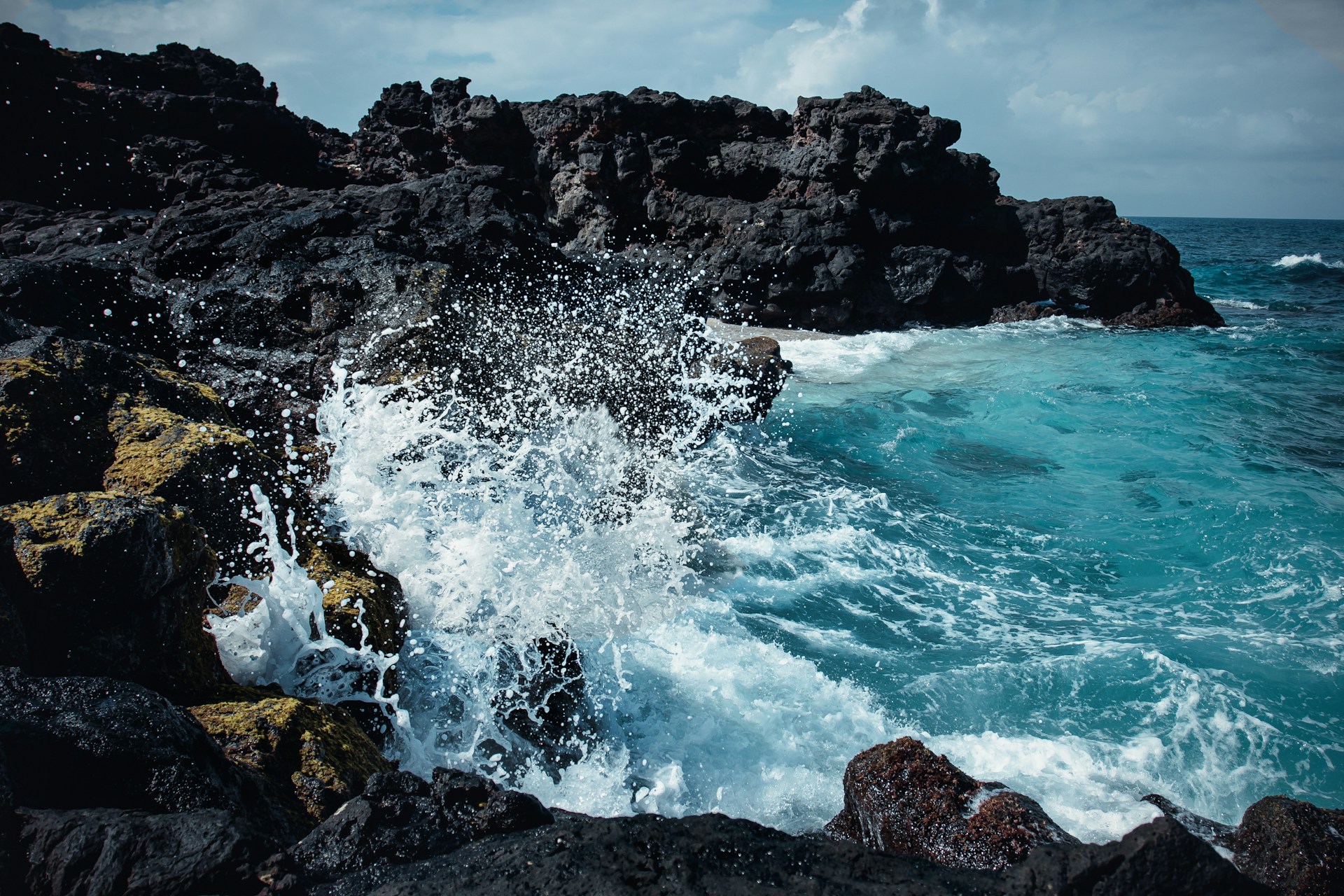
Madeleine Thien’s fourth novel takes place a few decades into the future in a place that might be in the South China Sea, or might not be in the South China Sea. Seven-year-old Lina and her father Wui Shin are staying in a refugee migrant compound that Lina refers to as the Sea. They’ve fled Foshan, China after climate change-induced flooding wiped the city out. We don’t know exactly where the Sea is located, little Lina says the body of water she can see from her window is the South China Sea, but another refugee in the compound says it is the Baltic Sea. Another says it is the Atrai River. Yet another exclaims it’s “The Atlantic, what else!” The Sea is a transitory place, most migrants only stay there briefly before hopping ships to other destinations. Lina has three books with her that were part of the ninety-book collection called The Great Lives of Voyagers—Volume three about the poet Du Fu, Volume seventy about the philosopher Baruch Spinoza, and volume eighty-four about philosopher Hannah Arendt.
The location of the Sea isn’t the only strangeness—Lina discovers three refugees in the room next to hers and her father’s. The first introduces himself as Jupiter and when Lina tells him that she came from the city of Foshan Jupiter asks her an odd question: “Has the war spread so far?” Lina says no, tells him about the flooding. Jupiter continues: “When the rebellion started people were driven this way and that…it was a nightmare. My wife and kids disappeared.” Jupiter introduces Lina to a man bent over a work desk grinding glass: “Bento, your helper is here.” Bento waves them off, saying he needs no help. Then he introduces her to a woman standing in front of empty shelves, running her hand through the air as if along the spines of books. Jupiter says, “Blucher, your helper is here.” Blucher tells Lina there is a million things to do. “Let’s get started.” They ignore Lina when she asks how long they’ve been there.
Thien’s previous novel, Do Not Say We Have Nothing (shortlisted for the Booker), was also a refugee story, but she’s not repeating herself with Records. Do Not Say was a historical novel with sub-plots set during the beginning of Mao Zedong’s reign in the 40’s up to the Tiananmen Square protests of 1989. Now Thien is leaning into magical realism, although she sneaks up on us to do it. The three refugees in the room next door disparage Lina’s three Voyager books (they are indeed abbreviated children’s books). And one by one they sit Lina down to tell her the complete stories of the people in her books. An alert reader might catch on when Blucher tells Lina the story of Hannah Arendt—Arendt’s husband’s name was Heinrich Blücher. The three mysterious refugees next door are avatars for Du Fu, Spinoza, and Arendt, making Records part omnibus biography, part climate change alarm. Being a novelist and not a biographer, however, allows Thien to take a little license when her avatars relay their stories, such as having a friend of Spinoza, instead of Spinoza himself, being the sadist who throws spiders into jars to watch them fight to the death. Thien also speculates on what Hannah Arendt must have felt when she found out Walter Benjamin had committed suicide. She also tests us a little—in the Hannah Arendt retelling she refers to the professor that Hannah had an affair with when she was his student as “The Lecturer.” People familiar with Arendt would of course know The Lecturer was Martin Heidegger.
Lina’s mother and brother are not with her and her father Wui Shin at the Sea, they were separated during the chaos of the storm and the redrawing of borders around Foshan. Lina would like to leave the Sea and search for them, but her father is too sick to travel. Wui Shin worked as a cyberspace systems engineer for a private company in Foshan (also for the government in Beijing before that). It was in fact the government that had sent him to work for the private company—to be a spy. His wife, Bee, finds one of his written reports that contains sensitive information about their family. She tears the report up, but doesn’t confront Wui Shin. Wui Shin rewrites the report and leaves it out where Bee can plainly see it. She tears it up again. Some of the people that Wui Shin used to work with in Beijing are being arrested. It’s not exactly clear who Wui Shin is spying on, or for. After they arrived at the Sea, Wui Shin repeatedly told Lina, “exile was a blessing because we freed ourselves from an empire in ruins, a hall of mirrors in which good people could betray themselves and never even know it.”
Thien is deliberately vague about when the story takes place, maybe after seeing how climate alarmists in the past were wrong about their predictions for the future (sometimes embarrassingly so), she doesn’t want to nail down a specific time frame. Not even the novel’s characters know: “When I said goodbye to Jupiter, he asked me, out of the blue, ‘Lina, what year is it now?’ I had searched for an answer. Finally I told him, ‘I wrote it down somewhere. If we can find that piece of paper, we’ll know'” When we’re told the story of Lina’s parents in Foshan before leaving, their grocer comments to them during a torrential downpour, “These bastards are drowning the city again.” She doesn’t say who the “bastards” are, but there are two government spies across the street at the time. The weather in Foshan is described as “It had been raining for months. There had been insufferable heat domes. The atmosphere was wet, chilled, steaming, like a kitchen with all its windows sealed. The water coming out of the taps was a frighteningly bluish-gold.” It’s hard to tell if experiencing a heat dome and chills at the same time is a chaotic weather pattern or a copyeditor’s oversight.
As the three refugees in the next room tell Lina their stories, they offer life lessons as well. Lina is showing them her only photo of her mother, brother, and aunt, and asks them if they think devotion is a kind of happiness:
No one answered at first, and then Bento, following my gaze, leaned across and picked up the photo. He studied the faces of my family. “The ancients thought that we could confess our grief and pain to just about anyone,” he said, “even to strangers, but we trust few people with our happiness. The mark of a true friendship might be a complete readiness to share our happiness, and to receive theirs.”
Lina’s father seemed to be upset at that and asks, “So when a man betrays his friends, is he destroying his home?” He’s likely recalling his days as a spy and one can’t help but wonder if his illness is psychosomatic.
Thien turns didactic at points throughout the novel—we’re given a lesson on the formation of the North Sea and how twelve thousand years ago it was dry land that a person could cross by foot from what is now England to what is now the Netherlands, and how the Seine, the Rhine, and the Thames were once all one river. She wraps up her historical climate lesson with a warning: “Within a century, what was once land became ocean, and all those prosperous towns lay tens of metres below the water.” Wui Shin, before leaving Foshan, takes Lina to have one last look around before leaving in the downpour: “Listen,” Wui said. “We’re the last generation who will know, that is, touch, the reality of this world before it disappears into dysfunction.” The Chicken Littleism here is a little off putting, especially after all the prognostications of doom over the last few decades that have failed to materialize. The Book of Records is at its best with the biographical retellings of Du Fu, Spinoza, and Arendt. Even readers who are already familiar with them will enjoy it here as Thien enlivens them with the thoughts and feelings that biographers often have to skip over as they relay their facts to us. Spinoza’s loneliness, Arendt’s courage, and Du Fu’s poverty anxiety all come alive on the page as they are wrenched from their homes by persecution—and pass the Voyager baton onto Lina.
Hugh Blanton’s latest book is Kentucky Outlaw.
Add your first comment to this post